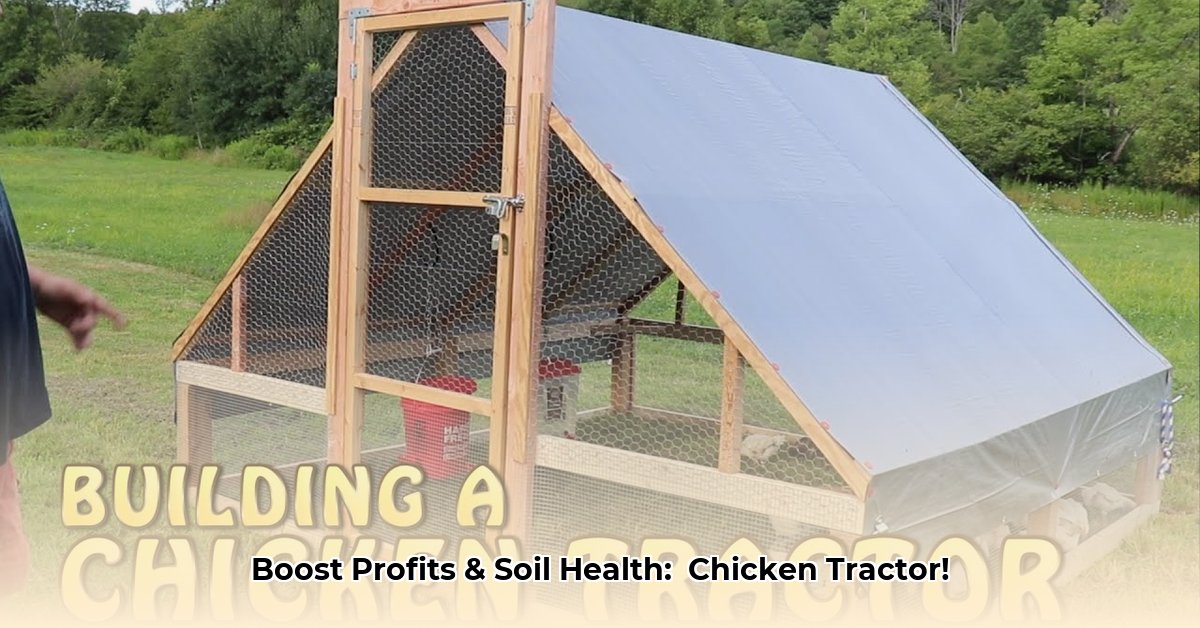
Want to raise chickens sustainably and profitably? A large-scale mobile chicken tractor might be your answer! This guide provides a step-by-step approach to designing, building, and managing this ambitious undertaking, blending practical advice with real-world examples. Whether you're a seasoned farmer or just starting, we’ll empower you to build a thriving and environmentally responsible chicken operation. For more visual examples, check out these chicken tractor images.
Huge Chicken Tractor: Your Path to Sustainable Poultry Profits
Raising chickens profitably requires efficient systems. A large chicken tractor offers a sustainable solution, boosting your bottom line while benefiting the environment. But how do you navigate the challenges of scaling up? This guide provides a practical roadmap.
Designing Your Giant Chicken Home: More Than Just a Coop
Building a large chicken tractor demands careful planning. Before you start, consider:
- Scale: How many chickens? How much land? These factors determine your design and profitability. A well-designed system can house thousands of birds efficiently.
- Mobility: How will you move this structure? Wheels, a small tractor, or skids? Consider the terrain and weight.
- Structure: Build for durability! Use weather-resistant materials for longevity. A robust design minimizes repair costs over time. Consider a modular design for easier expansion.
- Ventilation: Proper airflow is crucial for chicken health and egg production. Inadequate ventilation leads to respiratory issues and reduced profits.
- Accessibility: Design for ease of cleaning, feeding, and egg collection. Ergonomics matter; prioritize efficiency to reduce labor costs.
Investing time in design is crucial for long-term success. It's an investment in your time, health, and your birds' well-being.
Navigating the Regulatory Roost: Permits and Compliance
Before construction, understand local regulations. Zoning laws, waste management rules, and animal welfare standards vary. Contact your local agricultural extension office or city planning department. Ask directly about permits required for a large-scale operation. Proactive compliance prevents costly fines and delays.
Biosecurity: Protecting Your Flock and Your Profits
Disease outbreaks can devastate a large-scale operation. Proactive biosecurity is vital:
- Quarantine: Always quarantine new birds to prevent disease introduction. This single step significantly reduces the risk of widespread outbreaks.
- Hygiene: Regularly disinfect the tractor and surroundings. This preventative measure is crucial for maintaining a healthy flock.
- Pest Control: Control rodents and insects, which can spread diseases. Regular inspections help prevent infestations.
- Monitoring: Regularly check birds for illness. Early detection allows for prompt treatment and reduces losses.
"Biosecurity isn't just about preventing disease; it's about protecting your financial investment," says Dr. Emily Carter, Avian Veterinarian at the University of California, Davis. A robust biosecurity plan minimizes risks and maximizes profitability.
Manure Management: Turning Waste into Wealth
Chicken manure is a valuable resource. Efficient manure management is key:
- Rotational Grazing: Regularly moving the tractor distributes manure, preventing overgrazing and promoting healthy pasture growth.
- Composting: Composting transforms manure into a valuable soil amendment, reducing fertilizer costs and improving soil health.
- Soil Testing: Regularly monitor soil nutrient levels to optimize pasture health. This ensures that your chicken manure is used effectively.
Effective manure management is environmentally friendly and financially advantageous.
How to Calculate Profitability of Large-Scale Mobile Chicken Tractors: A Step-by-Step Approach
Accurate profitability calculations are crucial:
- Production Costs: Include feed, chicks, housing, labor, veterinary care, transport, and utilities. Account for unexpected expenses.
- Production Output: Project egg production based on flock size, breed, and laying rates. Use conservative estimations.
- Revenue: Determine your selling price per dozen. Consider wholesale vs. retail pricing and potential value-added products.
- Non-Egg Revenue: Include potential income from manure sales.
- Gross Profit: Subtract production costs from revenue.
- Net Profit: Subtract all other business expenses (taxes, insurance, marketing, loan repayments).
- Return on Investment (ROI): Divide net profit by total investment.
This detailed approach provides a realistic assessment of long-term profitability.
Pros and Cons of Large-Scale Mobile Chicken Tractors
| Pros | Cons |
|---|---|
| Increased egg production and efficiency | High initial investment |
| Improved animal welfare and health | Regulatory compliance challenges |
| Enhanced soil fertility and reduced fertilizer costs | Risk of disease outbreaks without robust biosecurity |
| Potential for additional revenue streams (manure sales) | Labor intensive, especially during peak seasons |
Remember, building a successful large-scale operation requires careful planning, commitment, and a willingness to adapt. Embrace the challenges, connect with other farmers, and learn from their experiences. The rewards of a thriving, sustainable, and profitable chicken operation are worth the effort.